In this article
Illustrative photo by airfocus / Unsplash.
A useful project scope describes what you will deliver, what you need from the client and how both sides will recognize completion. It should make the work understandable before the project starts, not merely document disagreements afterward.
This guide covers operational planning. It is not a substitute for a contract or advice about the legal terms of your engagement.
Convert an outcome into deliverables
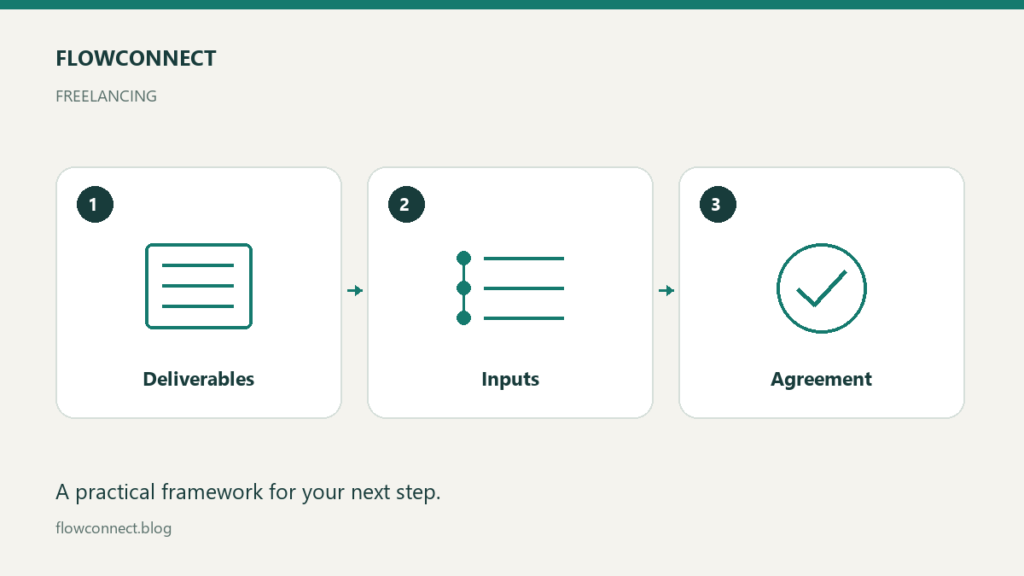
A client may ask for “a better online presence.” That is a goal, not a defined assignment. Ask what needs to exist at the end of this project. For a copywriting engagement, the answer could be draft copy for a home page, services page and contact page.
State the format and boundaries. Does the assignment include copy only, or publishing it too? Are images, interviews or keyword research included? Answer these questions explicitly rather than relying on what seems standard to you.
Define the inputs and decisions
List the client material that the first milestone needs, who supplies it and when it is expected. Identify one person responsible for consolidating feedback. Several stakeholders can contribute, but conflicting instructions need a resolution process.
For the three-page example, inputs might include the actual services, audience, existing brand language and contact details. If those are incomplete, describe what can proceed and what must wait. A schedule based on imaginary inputs will be difficult to maintain.
Use a short scope worksheet
Project goal:
Deliverables and formats:
Included activities:
Excluded activities:
Client inputs and owners:
Milestones and dependencies:
Review process:
Completion criteria:
How changes will be discussed:
Completion criteria should be observable. “Three approved page drafts delivered in the agreed document” is clearer than “a website the client loves.” This does not remove subjective judgment, but it gives feedback a defined object.
Handle a change without confusion
Suppose the client asks for two extra landing pages halfway through the assignment. Record the request, explain its effect on effort and timing, and agree what happens before starting the additional work.
A possible operational response is: “The current scope covers three pages. I can prepare an estimate and revised milestone for the two additional pages, or we can prioritize them in place of two existing deliverables.” Use only options that make sense for the actual engagement.
Separate useful flexibility from invisible commitments
Small clarifications are part of collaboration. Repeated new deliverables, new approval layers or a changed audience can alter the project. Keep a decision log so the current agreement remains visible.
Do not treat the log as a weapon. Its purpose is to make decisions and consequences understandable. A client should be able to see what changed without reconstructing weeks of messages.
Read the scope from the client's perspective
Before kickoff, ask whether a person outside your profession could understand each deliverable. Replace internal terminology with examples where needed. Confirm that dates and responsibilities match the latest conversation.
Then use the same scope during onboarding, milestone review and handoff. A document that is written once and never consulted cannot guide the work. Keep it concise enough to remain the reference both sides actually use.